Active Stacking Mistakes: When Skincare Layering Backfires
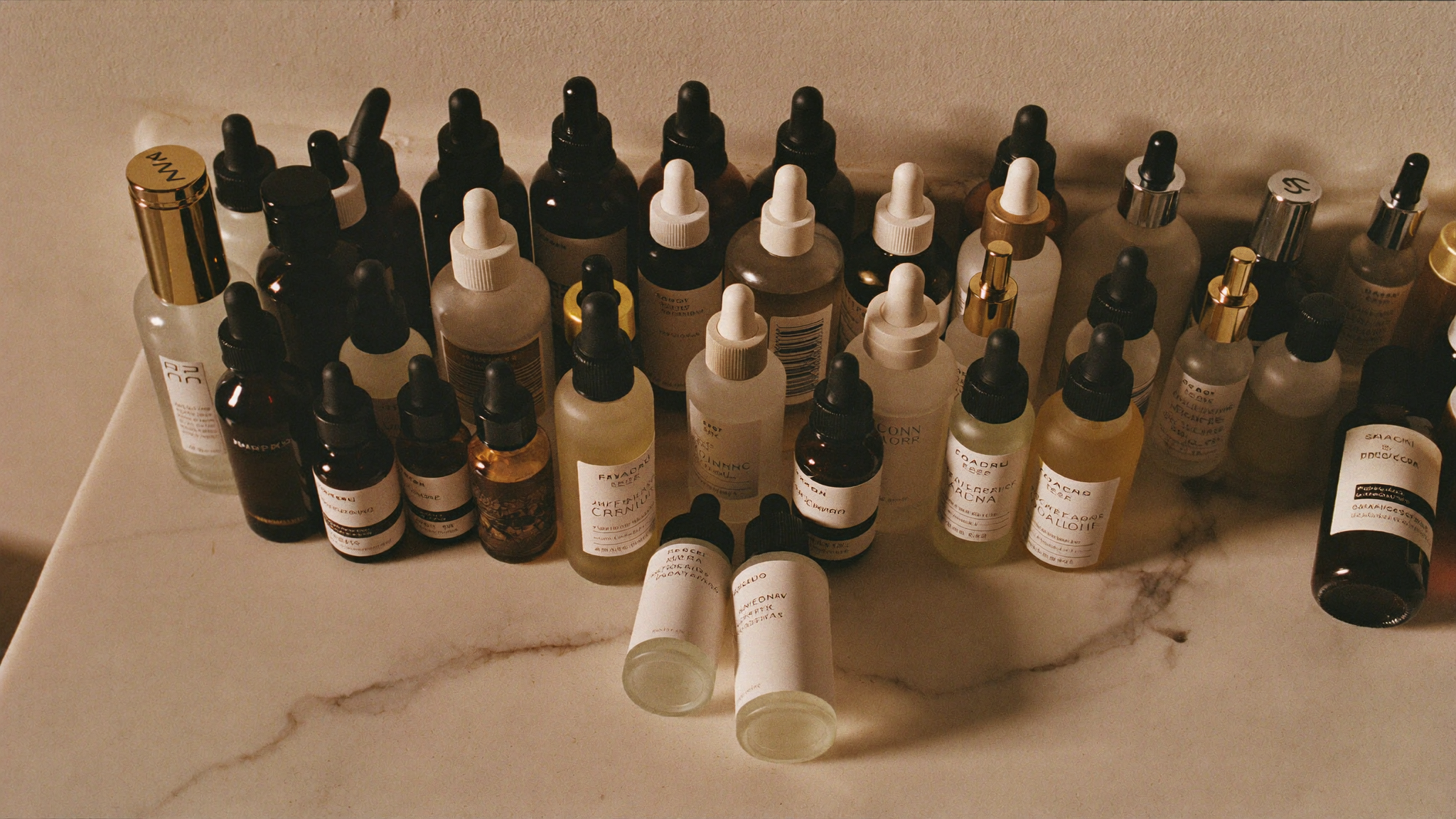
When Skincare Layering Backfires
More actives isn’t more results. Layer the wrong combinations and your skin barrier breaks down, your actives cancel each other out, and the dark spots you’re trying to fade get worse instead of better. Here’s the conflict map — and the focused alternative.
Shop the Ritual LineWhy “more actives” is always sold to you
Selling skincare is easier when every breakout needs a serum, every dark spot needs a treatment, every routine needs a step. The premium-skincare playbook is built around selling you eight things instead of three. Influencers reinforce it. Brand marketing reinforces it. Your routine grows.
What rarely gets explained: most over-the-counter actives are formulated to work as standalone treatments, tested in clinical settings against placebo, not against four other actives layered on top. Combine them recklessly and the math doesn’t hold.
Your skin barrier is the active ingredient nobody’s selling.
Common stacking mistakes (and what they actually do)
L-Ascorbic Acid + Retinol same session
L-Ascorbic Acid requires low pH (2.5–3.5); retinol works best at higher pH. Layered, they often deactivate each other AND compound irritation. Result: barrier damage, no benefit.
AHA/BHA + Retinol same night
Both are exfoliating mechanisms (chemical exfoliation + cellular turnover acceleration). Together they thin the stratum corneum, cause peeling, redness, and — on melanin-rich skin — PIH that compounds whatever pigmentation you were treating.
Multiple acids in one routine
Glycolic + salicylic + lactic + mandelic all in 24 hours is over-exfoliation. The first acid does the work; the rest just inflame already-thinned skin.
Niacinamide + L-Ascorbic Acid (the debate)
The old guidance said they cancel each other (niacin reacting with ascorbic to form niacin); modern formulation chemistry shows this only happens at very high heat. In practice they’re compatible — but only if your barrier can handle two strong actives in the same routine. Most users would benefit from picking one and going deep, not stacking.
Hydroquinone + AHA + Retinol
This is the classic “Kligman’s formula” melasma protocol — prescribed by dermatologists, but it carries real risks: skin thinning, photosensitivity, paradoxical darkening (ochronosis) on melanin-rich skin. Not a routine to assemble OTC.
Why this is worse for melanin-rich skin
On melanin-rich skin (Fitzpatrick IV–VI), any inflammation triggers post-inflammatory hyperpigmentation — the dark spots that show up after irritation calms. Stack three actives, generate three layers of micro-inflammation, get three layers of PIH compounding whatever the routine was supposed to fix.
The user buys more brightening serum. Stacks it on top. PIH worsens. Cycle continues.
Compound-safe pairings (Turimere’s approach)
Turimere is built around actives that work synergistically without barrier damage:
- 3-O-Ethyl Ascorbic Acid + Niacinamide + Turmeric — all gentle on barrier, all attack pigmentation through complementary pathways. Compound without conflict.
- Kojic Acid + Turmeric — two tyrosinase inhibitors working on the same enzyme. Pairs cleanly.
- Tranexamic Acid + Niacinamide — specifically pairs well for hormonal melasma. Standard dermatology pairing.
- Squalane + literally anything — inert, non-comedogenic, barrier-supporting. Pairs with everything.
The Turimere logic: Every product is formulated so it can be layered with every other Turimere product without conflict. Eleven products. Zero stacking mistakes possible. Pregnancy-safe across the board.
The student with eczema and the postpartum mom
A 21-year-old college student with chronic eczema flares can’t tolerate aggressive layering — every additional acid causes a flare. A 36-year-old postpartum mom dealing with melasma can’t use retinoids or hydroquinone yet, so the popular “melasma stack” isn’t even an option. They share zero life context. They share the same conclusion: more actives = more problems. A focused 3-product Turimere ritual works for both.
The relevant routine isn’t the most ingredients. It’s the most effective ones that actually compound without canceling out.
Frequently asked questions
What’s the simplest effective routine?
Cleanse, treat (one targeted active), moisturize, SPF in AM. That’s it. A consistent 3-step routine outperforms a 10-step routine done occasionally.
How do I know if I’m over-stacking?
Signs of barrier damage: stinging on application, increased sensitivity, persistent redness, peeling, dehydration that no moisturizer fixes, sudden breakouts in new spots, slow-healing irritation. If three or more apply, you’re over-stacking. Drop products back to a minimum 3-step routine and let your barrier recover for 30 days.
Can I use multiple Turimere products together?
Yes. Every product is formulated to compound without conflict. Nothing in our line will fight with anything else in our line.
What about using Turimere alongside a non-Turimere active like retinol?
Retinol is fine alongside Turimere as long as you’re not pregnant or breastfeeding (Turimere is; retinol is not pregnancy-safe). Apply retinol on alternate nights from any acid-based products you have. Don’t layer retinol same session as L-Ascorbic Acid serums.
Is there a case for maximalist routines?
Some advanced users with intact barriers, professional guidance, and specific clinical goals can run more complex protocols safely. But that’s a small percentage of skincare consumers. Most users would benefit from less. The 10-step routine is marketing, not science.
One ritual. No conflicts.
Eleven products. Built to compound without barrier damage. Pregnancy-safe and melanin-rich friendly.
Shop the Ritual Line