Bacne & Body Acne: Real Skincare for the Hardest Spots to Reach
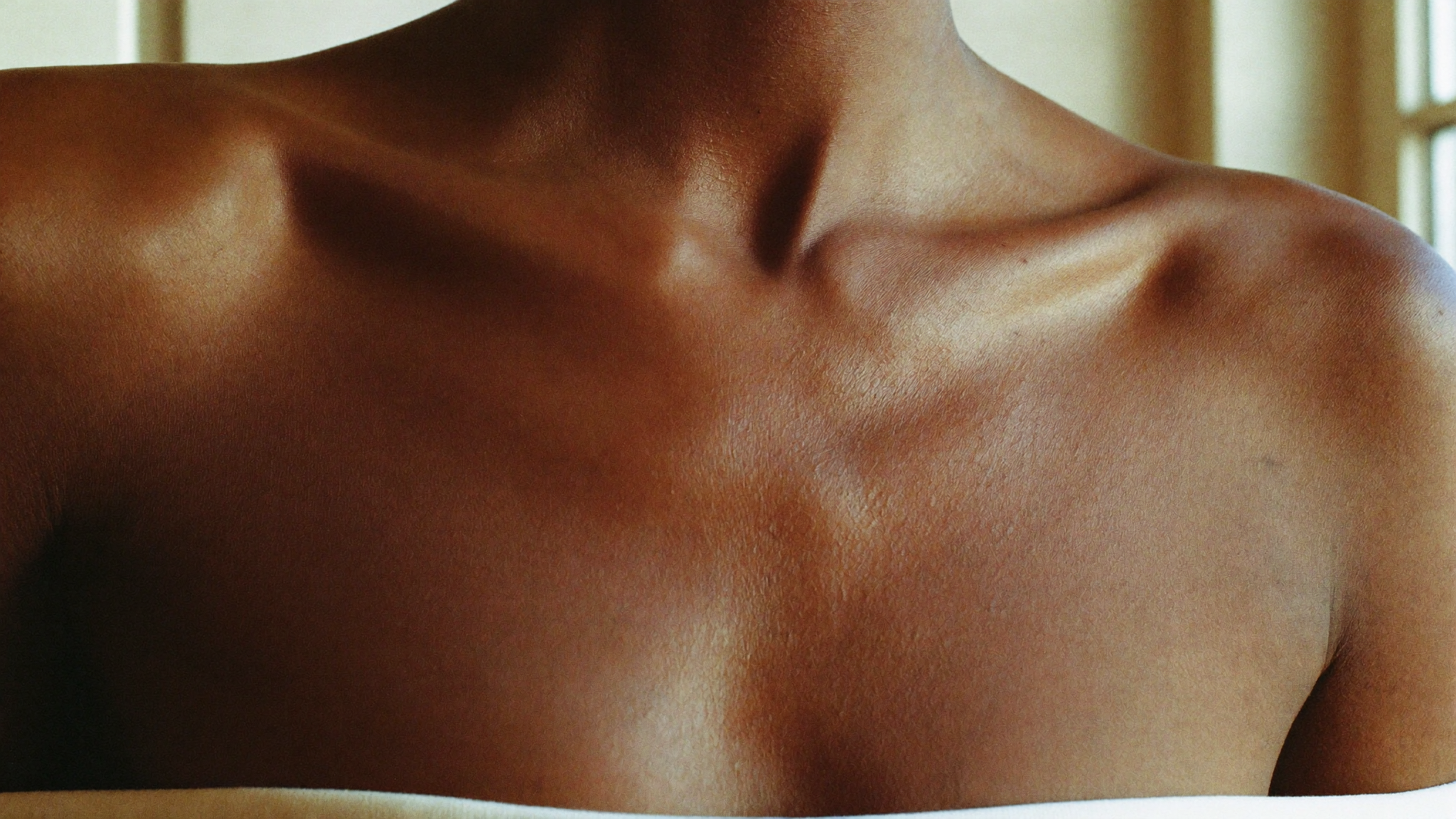
Bacne & Body Acne: The Real Skincare Approach
Bacne and chest acne aren’t a fluke. The back has more sebaceous glands than almost any other body zone. Standard body wash doesn’t cut it. Here’s what actually works — and how to fade the dark marks the breakouts leave behind, especially on melanin-rich skin.
Shop the ProtocolThe biology behind bacne
Your back and chest have a high density of sebaceous (oil-producing) glands. Combine that with friction from clothing, sweat that doesn’t get cleaned promptly, hair products that drip down your back, and hormonal shifts — and you have the conditions for chronic body acne. Compared to face acne, body acne is also harder to reach, harder to treat consistently, and slower to fade.
And then there’s what happens AFTER the breakout heals. On melanin-rich skin, every body breakout leaves behind post-inflammatory hyperpigmentation — dark marks that can outlast the actual acne by 12 to 24 months without intervention.
Body acne is two problems: the active breakouts AND the dark marks they leave behind. Most treatments only address one.
Common compounding factors
- Hair conditioner residue — rinses down your back when you wash your hair. Switch to washing hair first, body second. Game-changer for many people.
- Sweat sitting on skin — post-workout, shower within 30 minutes. Even better, change out of sweaty clothes immediately.
- Synthetic fabrics — polyester and nylon trap heat and sweat. Cotton lets skin breathe.
- Heavy backpacks or seatbelts — chronic friction inflames follicles in the exact zones where bacne shows up.
- Pillowcase hygiene — if you sleep on your back, your pillowcase matters for back acne. Change weekly.
- Hormonal cycle — some women see consistent flare-ups in the week before menstruation. Tracking helps you anticipate.
Active breakouts AND post-acne dark marks
Effective body acne protocol has two simultaneous workstreams:
Step 1: Address active breakouts. If you’re actively breaking out, see a dermatologist for a targeted protocol. Body acne often responds to topical clindamycin, low-strength salicylic acid body wash (under 2%), or short-term oral treatment. Turimere’s line doesn’t address active acne directly — we focus on what comes after.
Step 2: Address the dark marks (PIH). Once breakouts calm down, the dark spots they leave behind are exactly what Turimere is built for. Tyrosinase inhibition (turmeric + kojic acid + niacinamide) fades them. Pregnancy-safe and doesn’t re-trigger inflammation.
Fading dark marks on back, chest & shoulders
For post-bacne hyperpigmentation — after active acne has calmed, when you’re left with the dark marks:
- 2–3 nights per week: Use the Turmeric & Kojic Acid Cleansing Pads on the affected zones in the shower. Apply, let sit 30 seconds, rinse.
- Same nights, post-shower: Apply the Turmeric Luxe Brightening Butter generously to back, chest, shoulders. The niacinamide also helps barrier-heal post-acne skin.
- Every morning: Butter again, especially on chest and shoulders that see sun exposure. SPF on visible zones.
- 2 nights per week, separate from Cleansing Pads: The Turmeric Luxe Scrub for gentle physical exfoliation to accelerate dead skin turnover.
Body PIH cycle is 35–50 days. Expect early lightening at 4 weeks, meaningful change at 8–12 weeks, full fade at 4–6 months with consistent use.
The bridesmaid and the marathon runner
A 28-year-old bridesmaid trying to clear her back for a strapless dress in 6 weeks. A 44-year-old marathon runner whose chest is permanently dotted with dark marks from years of sweating in synthetic gear. They share zero life context. They share the same Turimere protocol — Cleansing Pads 2–3x weekly + Butter daily.
For the bridesmaid: realistic expectations are partial fade in 6 weeks; significant fade by the wedding if she starts 12 weeks out. For the runner: a consistent year of the protocol can fade what years of sweat compounded. Both work. Both are pregnancy-safe if life timing demands it.
Frequently asked questions
Can Turimere treat active bacne?
Not directly. We focus on post-inflammatory hyperpigmentation — the dark marks that linger after the active breakout heals. For active acne, see a dermatologist for a targeted protocol (often topical or oral treatment), then bring Turimere in to address the PIH that’s left behind.
Will dark marks from bacne ever go away on their own?
Usually yes — but slowly. Body PIH can take 12–24 months to fade without intervention. The Turimere protocol typically accelerates that to 3–6 months for meaningful fade. Sun exposure during this period prolongs the fade significantly.
Why are bacne dark marks darker on me than on lighter-skinned friends?
Melanin-rich skin produces more pigment in response to any inflammation, including acne. The same breakout that leaves a faint pink mark on lighter skin can leave a much darker brown mark on melanin-rich skin. The Turimere protocol is built around this exact mechanism.
Is this protocol safe during pregnancy?
Yes. The entire Turimere line is pregnancy and breastfeeding safe. Pregnancy hormones can flare bacne in some people — you can use the Butter and Cleansing Pads throughout pregnancy to address PIH that develops, though active acne treatment may need to wait or use different (pregnancy-cleared) options.
Can I use a back-loofah or shower brush?
Yes, but gently — once or twice per week, not daily. Aggressive scrubbing on already-inflamed bacne can worsen it AND deepen the PIH that follows. The Turimere Scrub is gentler than most loofahs and formulated for sensitive zones.
Fade what bacne left behind.
Pregnancy-safe PIH protocol for back, chest, and shoulders. No hydroquinone. Won’t re-trigger inflammation.
Shop the Protocol