Body Hyperpigmentation: A Complete Map
Dark Spots, Zone by Zone
Body hyperpigmentation is rarely random. Each zone darkens for specific reasons, and each responds to a specific protocol. Here’s the complete map — from underarms to bikini line to postpartum belly to post-shave dark marks — and the active intelligence that actually fades each one.
Shop Body BrighteningOne enzyme. Many zones.
Every form of body hyperpigmentation — friction-induced, hormone-induced, sun-induced, post-inflammatory — traces back to the same biological mechanism: the tyrosinase enzyme producing excess melanin in response to some kind of trigger. The trigger differs by zone. The mechanism doesn’t.
That’s why the same actives that fade dark spots on your face work on every other body zone too. The skincare industry just hasn’t bothered to formulate them in body-appropriate formats. Turimere did.
Why each area darkens, and what fades it
Underarms
Why it darkens: Chronic friction from arm movement, deodorant residue (especially aluminum compounds), shaving microtrauma, and sweat. Every shave or rub triggers low-grade inflammation. On melanin-rich skin, that inflammation deposits pigment.
What fades it: Multi-step ritual combining gentle exfoliation (kojic acid, turmeric), barrier moisture (squalane, niacinamide), and consistent application over 8–12 weeks. The Underarm + Bikini Even-Tone Ritual is built for this zone specifically.
Bikini line & inner thigh
Why it darkens: Same friction-plus-shaving cycle as underarms, often compounded by tight clothing, waxing, ingrown hairs, and hormonal shifts. PIH stacks fast in this zone for melanin-rich skin.
What fades it: Same protocol as underarms. Gentle exfoliation + barrier repair + patience. Avoid harsh acids that worsen inflammation. Same Underarm + Bikini Even-Tone Ritual covers both zones.
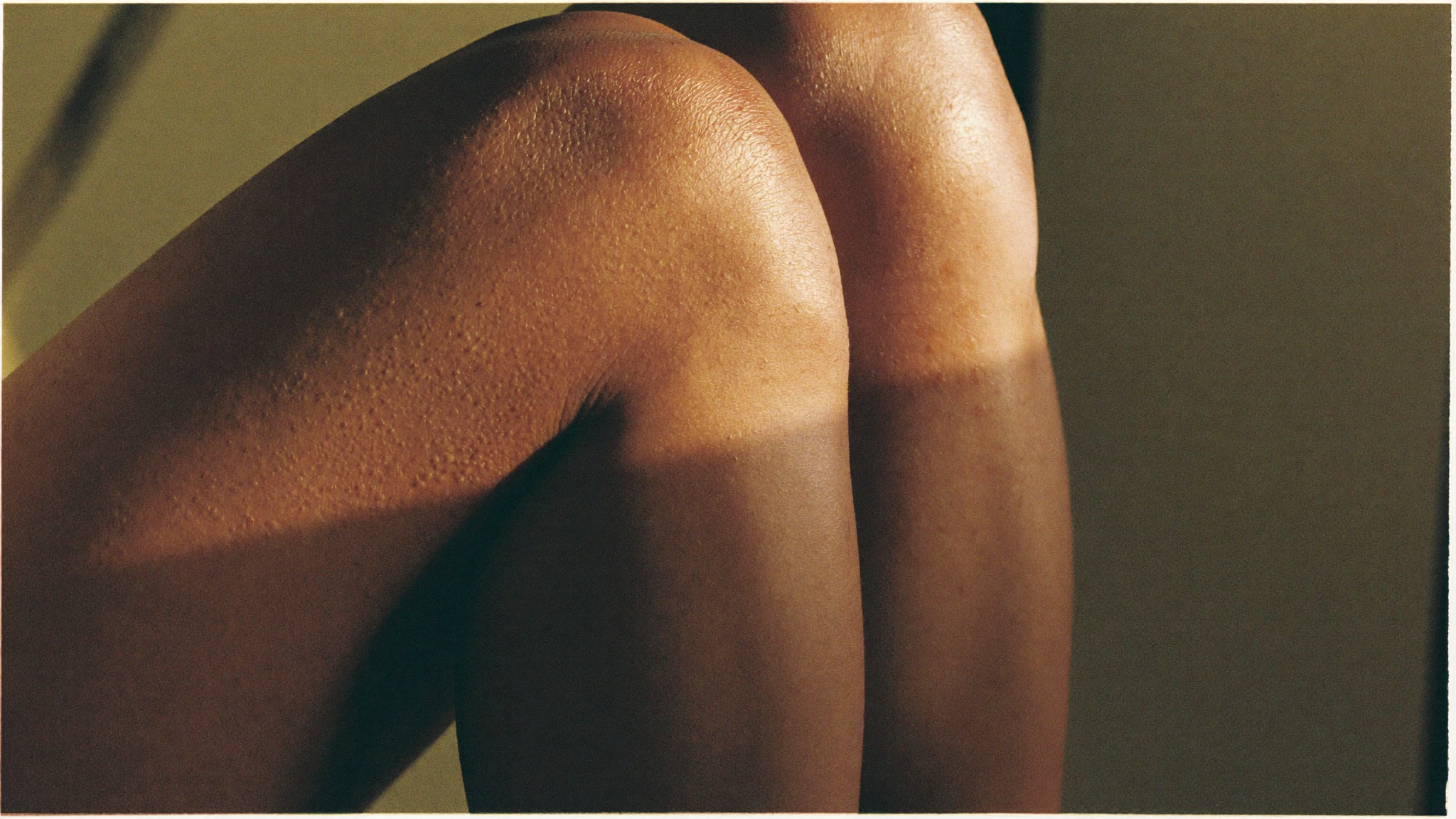
Knees, elbows & ankles
Why it darkens: Thicker skin with more cellular buildup, constant friction from clothes and floor contact, sun exposure (especially knees and elbows during summer). Discoloration here is often a combo of dead skin accumulation AND pigment.
What fades it: Twice-weekly exfoliation with the Turmeric Luxe Scrub to address buildup, plus daily Turmeric Luxe Brightening Butter to address pigment. SPF on knees and elbows during summer is non-negotiable.
Postpartum belly & linea nigra
Why it darkens: The vertical dark line down the abdomen (linea nigra) and broader belly hyperpigmentation are hormonal — driven by elevated estrogen and progesterone during pregnancy. Usually fades on its own postpartum, but slowly. Often takes 12–18 months without intervention.
What fades it: Apply Turmeric Luxe Brightening Butter daily — safe throughout pregnancy and breastfeeding. The tranexamic acid and niacinamide target hormonal melasma. Most fading happens postpartum when hormones normalize; expect 6–8 weeks of consistent daily use for significant change.
Post-shave & post-wax dark spots
Why it darkens: Razor microcuts and waxing pull cause inflammation; on melanin-rich skin, inflammation = PIH. Razor bumps (pseudofolliculitis) compound the problem. Every shave can deepen the cycle.
What fades it: Switch to single-blade or sharp clean razor. Use Turmeric & Kojic Acid Cleansing Pads 2–3 nights per week post-shave (not immediately after — wait 4 hours for skin to calm). Apply Butter daily.
Bacne & chest dark marks (post-acne PIH)
Why it darkens: Body acne triggers inflammation; the breakout heals but pigment lingers. PIH on body skin can persist for 12–24 months without intervention because body skin turnover is slower than face.
What fades it: Address active acne first (different protocol). Once breakouts are calm, use Cleansing Pads in the shower 2–3 times per week and follow with Butter. Allow 12+ weeks for body PIH to meaningfully fade.
The college freshman and the new mom
A 19-year-old freshman with bacne and post-shave bikini-line dark marks needs to address two zones. A 32-year-old mom four months postpartum dealing with linea nigra and underarm darkening needs to address two different zones. They share zero life context. They share the same Turimere protocol — Butter daily, Cleansing Pads 2–3x weekly, Scrub on body twice weekly.
That’s what a complete map means. The protocol scales across zones, scales across lives, and stays pregnancy-safe throughout.
Frequently asked questions
How long until body hyperpigmentation actually fades?
Body skin cycle is 35–50 days (vs 28 for face). Expect early lightening at 4 weeks, meaningful change at 8–12 weeks, full results at 4–6 months with consistent daily use. Postpartum hormonal pigmentation can take longer because of hormonal half-life.
Is body hyperpigmentation treatment safe during pregnancy and breastfeeding?
The entire Turimere line is pregnancy and breastfeeding safe. That means you can use the Butter on existing dark spots throughout pregnancy and while nursing without worry. For active treatment of linea nigra and pregnancy melasma, fading is most effective postpartum once hormones normalize — not a safety issue, an effectiveness one.
Can I treat multiple zones at once?
Yes — and you should. The same products work across zones. Apply Butter as your overall daily moisturizer (full body); use Cleansing Pads on specific darker zones (underarm, bikini, bacne) 2–3x weekly; use Scrub on knees/elbows 2x weekly. One protocol, multiple zones, no extra cost.
What about hydroquinone for stubborn body dark spots?
We don’t recommend hydroquinone for body or face. It can be effective short-term but carries risks including ochronosis (paradoxical darkening) on melanin-rich skin, increased photosensitivity, and is restricted during pregnancy. Tyrosinase inhibitors like turmeric, kojic acid, and niacinamide deliver brightening with a much safer profile.
One protocol. Every zone.
Pregnancy-safe body skincare that addresses dark spots wherever they live. No hydroquinone. No bleach.
Shop Body Brightening